
Is Invisalign® painful?
If you’re in East Grinstead, Crawley or Rochester and considering having your teeth straightened, it’s important to have all the facts. Invisalign is a popular alternative to fixed braces because it is almost invisible and you can remove your aligners for eating and drinking. However, some patients hesitate about choosing Invisalign because they worry it could hurt.
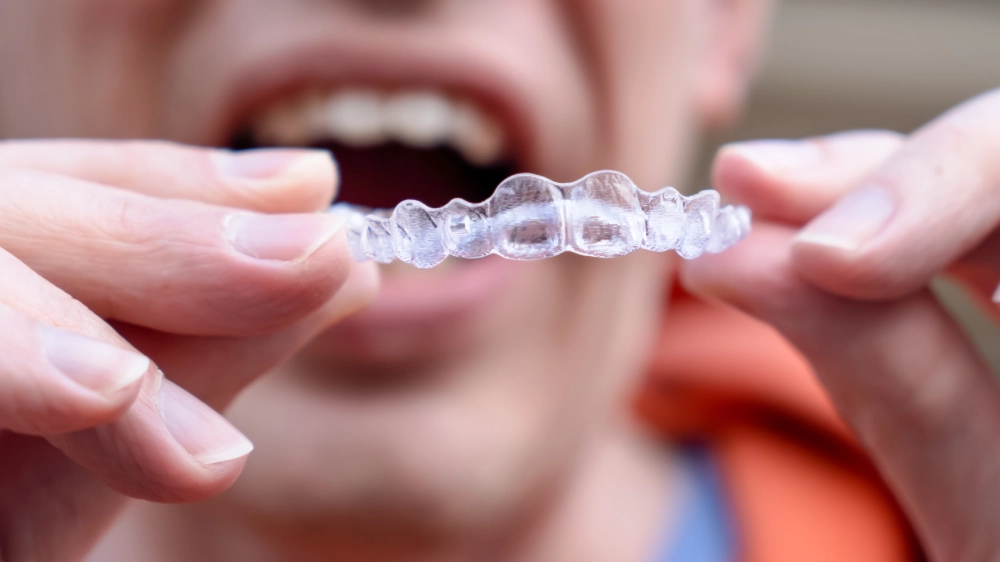
Usually, Invisalign is pain-free, although starting aligners can take some getting used to and you may feel some pressure and soreness in the first few weeks. However, as Invisalign is removable and there are no sharp wires and brackets that could cause injury, you are unlikely to feel significant discomfort. Having a straighter smile means that it is easier to clean your teeth and prevent decay and inflammation. Invisalign will also reduce tooth pain resulting from bite issues and crowded teeth.
In this blog, we’ll go into what to expect regarding pain from Invisalign, how to manage discomfort, and how to tell if there is a problem.
Situations where you may feel pain with Invisalign
Invisalign’s clear aligners are generally pain-free, but there are a few situations where you might experience some soreness, especially during the initial phase of your treatment. We’ll go into each of these below.
Starting a new set of aligners
Whether you’re starting Invisalign for the first time or have changed aligners a few times, it’s normal to experience some discomfort and pressure for the first few days with a new set. Each new set is designed to move your teeth a little closer to their final positions and that means that you may experience some soreness or tightness initially – this is a sign that your teeth are being straightened. The tightness will usually diminish within a few days.
Discomfort in one tooth
Sometimes, you may feel discomfort in one of your teeth more than others. This is usually nothing to worry about as it simply means that the tooth is being moved into its new position and is perhaps more out of alignment than the others. However, if you experience severe pain or sensitivity, this may be a sign that there is another problem needing attention such as decay or inflammation.
Rough or sharp edges
In rare cases, you might receive an aligner that has a rough or sharp edge. In this case, contact us at Enhance Smiles so that we can give you a replacement.
Rubbing on your cheeks and gums
For the first week or two, your aligners may take some getting used to and you may find that they, or any attachments provided, rub on your gums and cheeks. We supply orthodontic wax which will help protect the affected area. However, if it continues after one or two weeks, please contact us.
How to deal with Invisalign discomfort
Although Invisalign is generally pain-free, there are a few things you can do to prevent or lessen discomfort from Invisalign clear aligners, especially during the first few weeks of your treatment.
Wear your aligners as instructed
We recommend wearing your aligners for 20-22 hours per day and switching to new aligners on time. Not doing this can lengthen your treatment time and be less effective, as well as causing more discomfort as your teeth will be further out of position.
Start new aligners before going to bed
The first few hours are often the most uncomfortable with a new set of aligners, so try putting them in before bed so that you get 6-8 hours of tooth adjustment before you wake up. You may also find it useful at first to use a cold compress to soothe discomfort.
Clean your aligners with cold water
Hot water can damage your aligners and distort the shape, making them fit poorly and increasing discomfort, as well as making your treatment less effective. Instead, clean them with cold water.
Avoid hard or crunchy foods at first
Although with Invisalign you can eat what you want, a small minority of patients may experience sensitivity on their gums. Therefore, you may find it useful to stick to a soft food diet when you first start or change your aligners. This will minimise the pressure placed on your teeth when you chew. If you have sore gums, we also suggest avoiding food and drink which is excessively hot or cold.
Keep up your dental hygiene routine
When you start a dental treatment it is easy to deprioritise more routine aspects of your oral health, which can lead to inflammation and pain. Make sure that you floss regularly, brush your teeth twice a day and clean the aligners in the way advised by your dentist.
Contact us if there’s a problem
If you are experiencing severe pain or any other dental symptoms, do not hesitate to contact us in East Grinstead, Crawley or Rochester so that we can give you appropriate treatment. If you’ve been told you need another procedure such as an implant, filling or extraction, we will advise you on how to continue with the Invisalign process alongside this.
How Invisalign minimises pain
It is natural to ask whether any potential pain from a dental treatment is worth it. However, unlike fillings, dental implants and some cosmetic treatments, Invisalign is not an invasive treatment and is largely pain-free, with severe discomfort only occurring in very rare cases.
1. No brackets or wires
Traditional braces contain brackets and wires that can snag on your gums and cheeks, and may cause injury. Invisalign reduces discomfort as the aligners are designed to snugly fit your teeth and do not contain sharp metal edges.
2. Tailored to each patient
Before you start Invisalign we will take a 3D scan of your teeth. Rather than being one-size-fits-all, each set of aligners is therefore unique to you and will fit snugly against your teeth.
3. Fully removable
Invisalign is removable, making it easy to eat and clean your teeth. This helps you maintain your oral health and reduces the likelihood of decay and other dental issues.
4. Straighter teeth mean better oral health
Having straight teeth means that you will find it easier to clean your teeth as there will be fewer gaps for plaque to collect and fewer tight spaces where a toothbrush or floss cannot reach. Straightening your teeth with Invisalign in East Grinstead, Crawley or Rochester will help prevent problems in the future.
5. Addressing jaw and overbite issues
If you have crowded teeth, or an underbite, overbite or crossbite, this can give you jaw pain and make eating and speaking difficult. Over time, teeth which are out of place can lead to the erosion of tooth enamel, causing even more pain and leading to decay. By giving you a straighter smile, Invisalign will reduce the discomfort that misaligned teeth can cause, as well as giving you greater self-confidence.
How painful is Invisalign?
While a few patients do experience some discomfort, particularly in the first few weeks of their treatment, Invisalign is largely pain-free, and the benefits of having a straighter smile can last for a lifetime. If you are interested in having Invisalign treatment, please contact the team at Enhance Smiles today for a free consultation.
Frequently Asked Questions
1. Can I have Invisalign if I have a dental implant?
You can have Invisalign with a dental implant, but, as the implant cannot be moved, we will need to plan your treatment around the implant so that the surrounding teeth can be moved, while the implant is fixed in place. If you have been told you need a dental implant but do not have one yet, we ideally suggest completing Invisalign treatment before your implant is placed.
2. Can I have a filling if I am wearing Invisalign?
Yes – this is common and manageable, although your aligners may need slight adjustments to ensure they still fit properly. For more information, ask your dentist.
3. My new Invisalign aligner has a sharp edge. What should I do?
Don’t worry! Contact Enhance Smiles at our clinic in East Grinstead or Rochester and we’ll provide a replacement.
4. Will I need painkillers for Invisalign?
It is extremely rare to need prescribed painkillers, but taking over-the-counter pain relief may help to ease discomfort. If you are feeling any soreness, we suggest wearing a cold compress to ease this. However, if pain worsens or becomes unmanageable, please contact us so that we can examine your teeth and gums to locate the issue.
5. Can I switch from braces to Invisalign?
Yes! Many patients in East Grinstead, Crawley and Rochester have made the switch. Contact us today for a free consultation to discuss your options.